阅读约 5 分钟


There is an IT financial trap here that many businesses have not yet realized: while ransomware protection is certainly important, regulatory requirements demand that you preserve historical logs and audit files measured in PBs, which is actually the biggest black hole for hard drive budgets. Facing increasingly strict regulations such as the European DORA (Digital Operational Resilience Act, DORA), storing massive amounts of cold data entirely on expensive primary arrays or blindly uploading to public clouds is economically unsustainable. Only through QNAP's Scale-out PB-class storage architecture can businesses build an ultra-compliant, flexible, and ransomware-proof defense line within budget, with scalable expansion as needed.
Regulationdata is like a massive wave attacking, how should enterprise storage architectures respond?
Recently, regulators in the US, UK, Canada, and other countries have once again issued warnings, pointing out that advanced AI models such as Claude Mythos already possess cross-system vulnerability hunting capabilities. This means that when attacks become automated and deeply stealthy, enterprises must achieve 'post-event root cause analysis', which requires retaining massive system log files (Logs), snapshots and historical backups of each node, for a prolonged period of 5 to 7 years of 'absolute retention'.
Faced with the explosive growth of data at the petabyte scale, many enterprises are concerned, because over time, their existing Storage Space will inevitably reach full capacity.
If you want to store all these audit data—which are rarely accessed but legally cannot be deleted—on public clouds like AWS or Azure, the long-term dormant storage costs and the shocking data egress fees will become a financial nightmare. What enterprises truly need is a highly dense, scalable on-premises archive infrastructure that can accommodate unlimited data growth.
QNAP PB-class storage solution: The ultimate scalable on-premises compliance defense
To address the dual challenges of budgeting and compliance, leading enterprises have shifted to highly flexible scale-out architectures. Without impacting the main production system budget, the 'pay-as-you-grow' approach solves the problem, and QNAP enterprise-class storage solutions are designed precisely for this purpose.
- Break through space limitations with PB-level horizontal scale-out: Facing the explosive growth of data audits driven by AI attacks, traditional storage architectures are no longer practical. QNAP's scale-out storage cluster architecture supports cross-node horizontal expansion, allowing enterprises to easily add storage nodes as data increases. Whether it's hundreds of initial terabyte or ultimately breaking through PB-level historical logs and snapshots, everything can be seamlessly accommodated in the cluster, thoroughly eliminating the physical capacity limits of single hard drives.
- Zero additional License fees: The QuTS hero series based on the ZFS file system supports WORM and immutable snapshot protection mechanisms, helping enterprises comply with regulations.
- Protect your core budget from being compromised: Compared to the bottomless pit of unlimited-term subscription fees for public cloud, QNAP on-premises archive pools with large-capacity HDD offer a significant TCO advantage. This allows IT departments to reserve precious budgets for frontline AI tasks that truly require high-performance computing, rather than being drained by old log files.
| Comparing Items | Public Cloud Archive (e.g., AWS Glacier) | QNAP Scale-out NAS Solution |
|---|---|---|
| Long-term cost structure | Low initial, high cumulative (OpEx): Increases with data volume and years, with ongoing monthly fees and affected by exchange rate fluctuations. | Capitalized, high return (CapEx): One-time hardware purchase, cost amortized over time, and retains residual value. |
| data Retrieval Cost | Extremely Expensive (Fatal): When auditing 1PB of data, the traffic and inspection fees can reach tens of thousands of US dollars. | Zero Cost: Internal network allows on-demand browsing and tracing at any time, without incurring any additional costs. |
| Flexible Scalability | On-demand Usage: However, the underlying hardware cannot be controlled, and performance is limited by the cloud provider's resource allocation. | On-demand Expansion: By adding nodes, efficiency and capacity can be linearly increased, with control in the hands of the enterprise. |
| Compliance protection | requires additional purchase of locking services (such as Object Lock), and the setup is complex. | Built-in WORM and immutable snapshots: no extra Licensecost, one-click lock for 7 years of audit data. |
Compliance should not be a stumbling block that hinders enterprise progress. With QNAP's highly scalable architecture and tamper-proof design, enterprises can establish an indestructible defense for an unpredictable future at the most reasonable cost.
Common compliance storage architecture Q&A (FAQ)
Q: What are the differences between Immutable Snapshot and WORM? Will they conflict?
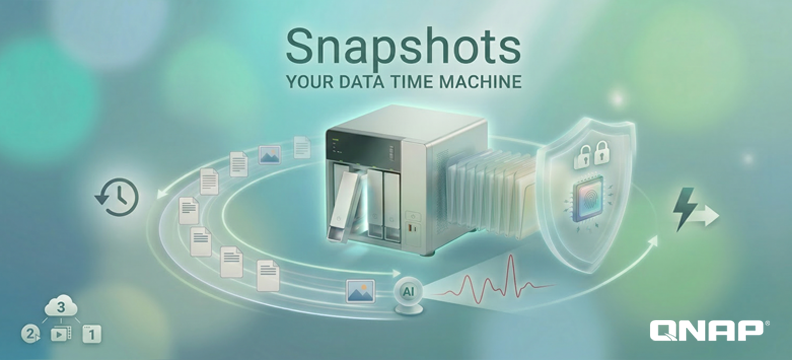
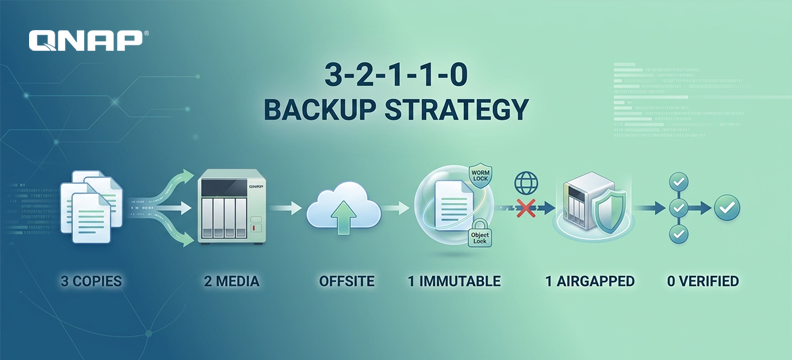
A: No conflict. WORM protects individual files from being tampered with in the “data folder”, while Immutable Snapshot locks the entire “point-in-time state” to prevent malicious deletion. QNAP’s QuTS hero NAS operating system supports enabling both features simultaneously in the same pool, providing dual protection of “content cannot be modified, backup cannot be deleted”, which is the best practice for strict regulations such as DORA or HIPAA.
Learn more: How to set up a WORM shared data folder as an HBS backup destination?
Q: If my compliance data volume (such as logs or surveillance videos) suddenly triples after two years, how should the architecture respond?
A: QNAP provides extremely flexible scalability. In the future, you only need to purchase additional QNAP high-density storage enclosures to seamlessly expand your existing pool, eliminating the downtime risks and time costs of migrating old data to a new host.
Learn more about QNAP PB-level storage solutions