Security & Risk Considerations
OpenClaw (formerly Clawdbot / Moltbot) is a powerful automation tool that can access local files, execute commands, and use credentials such as API keys or tokens, depending on configuration. Users must therefore configure it with caution and assume full responsibility for its use.
- Access control: Do not expose the OpenClaw web interface directly to the public Internet. If remote access is required, use a VPN, IP allowlist, or strong authentication mechanisms.
- Third-party extensions: Only install skills or extensions from trusted sources. Security research has shown that malicious extensions may attempt to steal data or credentials.
- Isolation and permissions: Run OpenClaw in an isolated environment (such as Ubuntu Linux Station) and avoid granting unnecessary system or root privileges.
- Credential protection: Protect API keys and tokens carefully and rotate them if exposure is suspected.
Best Practice: OpenClaw is intended for advanced or experimental use. We recommend always reviewing security implications before enabling long-running or unattended operation. Learn how QNAP ensures user data security in Ubuntu Linux Station and how you can further enhance data security.
Note
The developer has renamed the project multiple times (Clawdbot → Moltbot → OpenClaw). Older documents may still reference “Clawdbot” or “Moltbot,” but they refer to the same tool.
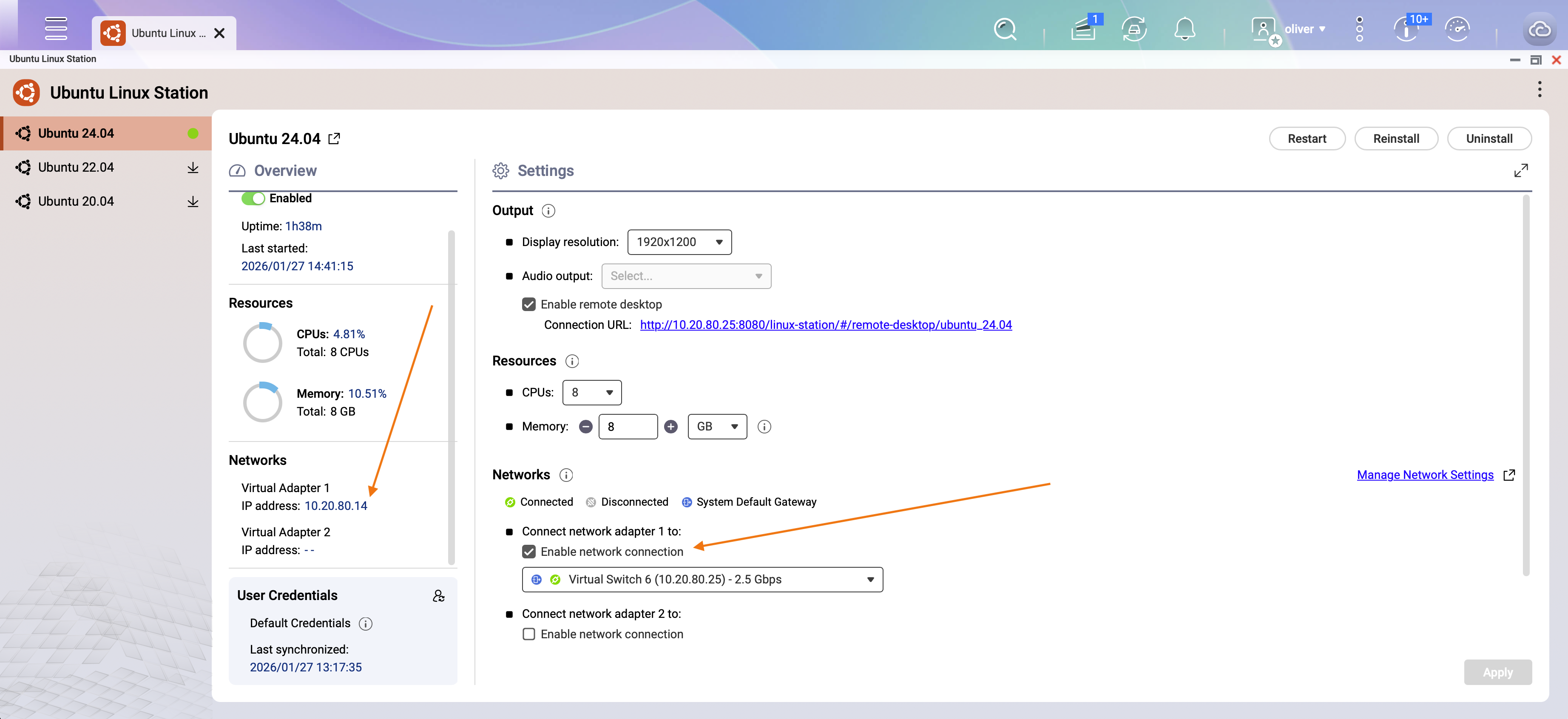
If you want devices other than the NAS to connect to the web interface, you can add a network adapter in Ubuntu Linux Station network settings and obtain an external IP address for the Ubuntu environment. Do not expose the web interface directly to the public Internet. Refer to the Security & Risk Considerations section above for recommended access controls.
Applicable Products
- QNAP NAS models that support Ubuntu Linux Station
- Ubuntu Linux Station
- Internet connection for downloading Ubuntu images and installation resources
Overview
OpenClaw (previously known as Clawdbot and Moltbot) is a third-party automation and productivity tool designed to run as a long-running “agent” that can execute tasks on your behalf (for example, managing messages, emails, calendars, and running local commands depending on configuration). The official project positioning emphasizes “an AI that actually does things,” typically by connecting chat channels to a local runtime that can interact with your system.
Scenario
You want to deploy an Ubuntu desktop environment on a QNAP NAS to test or operate OpenClaw 24/7. This example uses Ubuntu 24.04, but other supported Ubuntu versions may also be used.
Screenshot: Ubuntu Linux Station desktop environment running on QNAP NAS
Procedure
Step 1: Install Ubuntu Linux Station
- Log in to QNAP QTS.
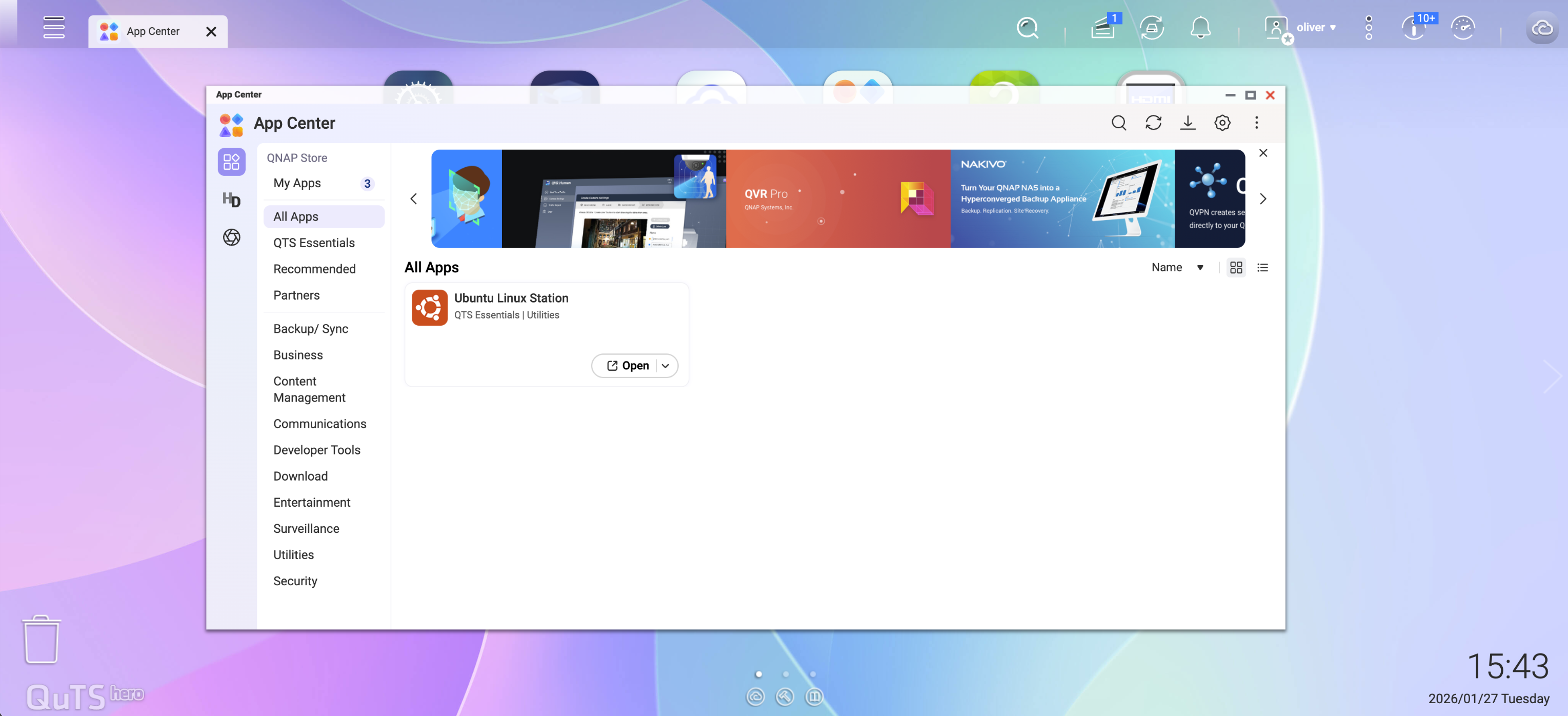
- Open App Center.
- Search and install Ubuntu Linux Station.
Step 2: Download and Install Ubuntu
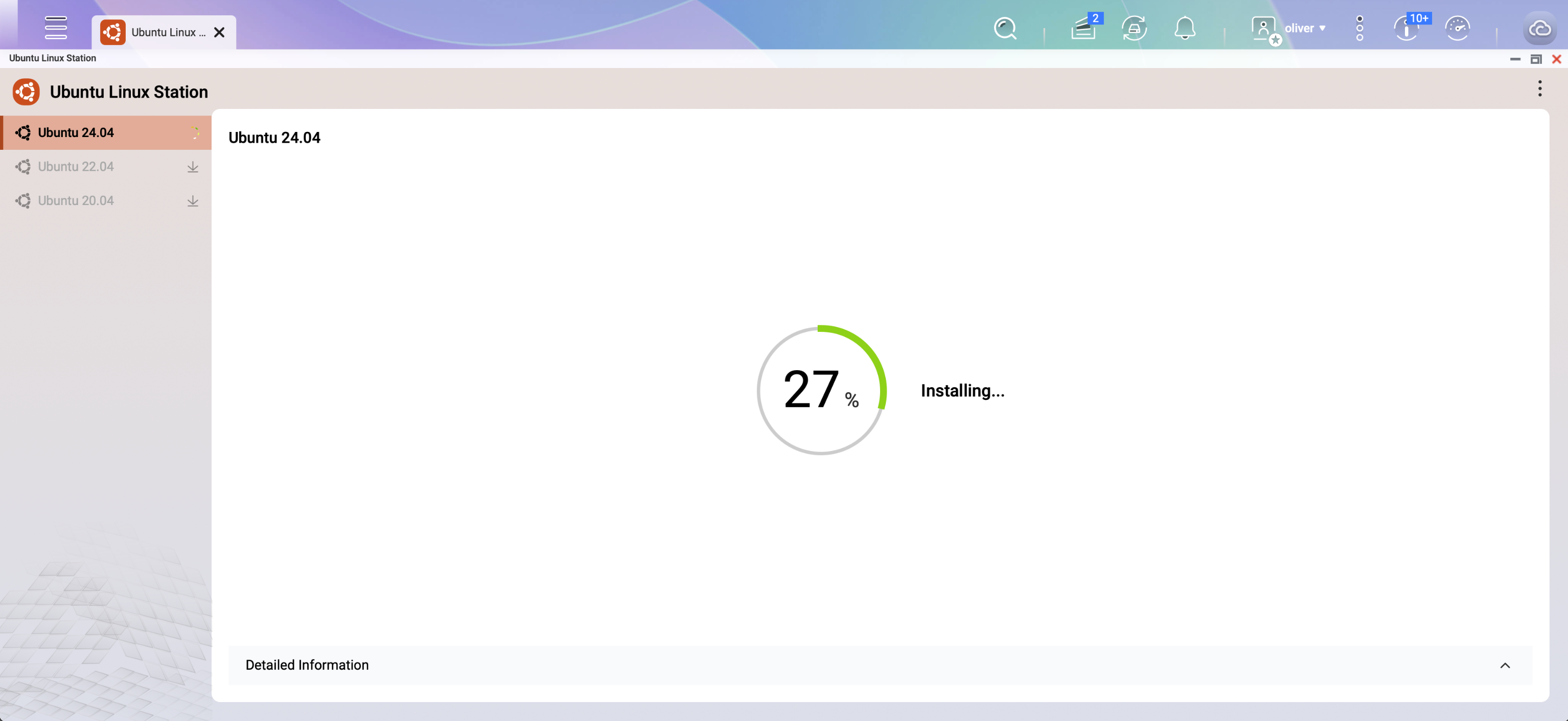
- Launch Ubuntu Linux Station.
- Select the Ubuntu version to install.
- In this example, choose Ubuntu 24.04.
- Wait for the image download and installation to complete.
Step 3: Connect via VNC
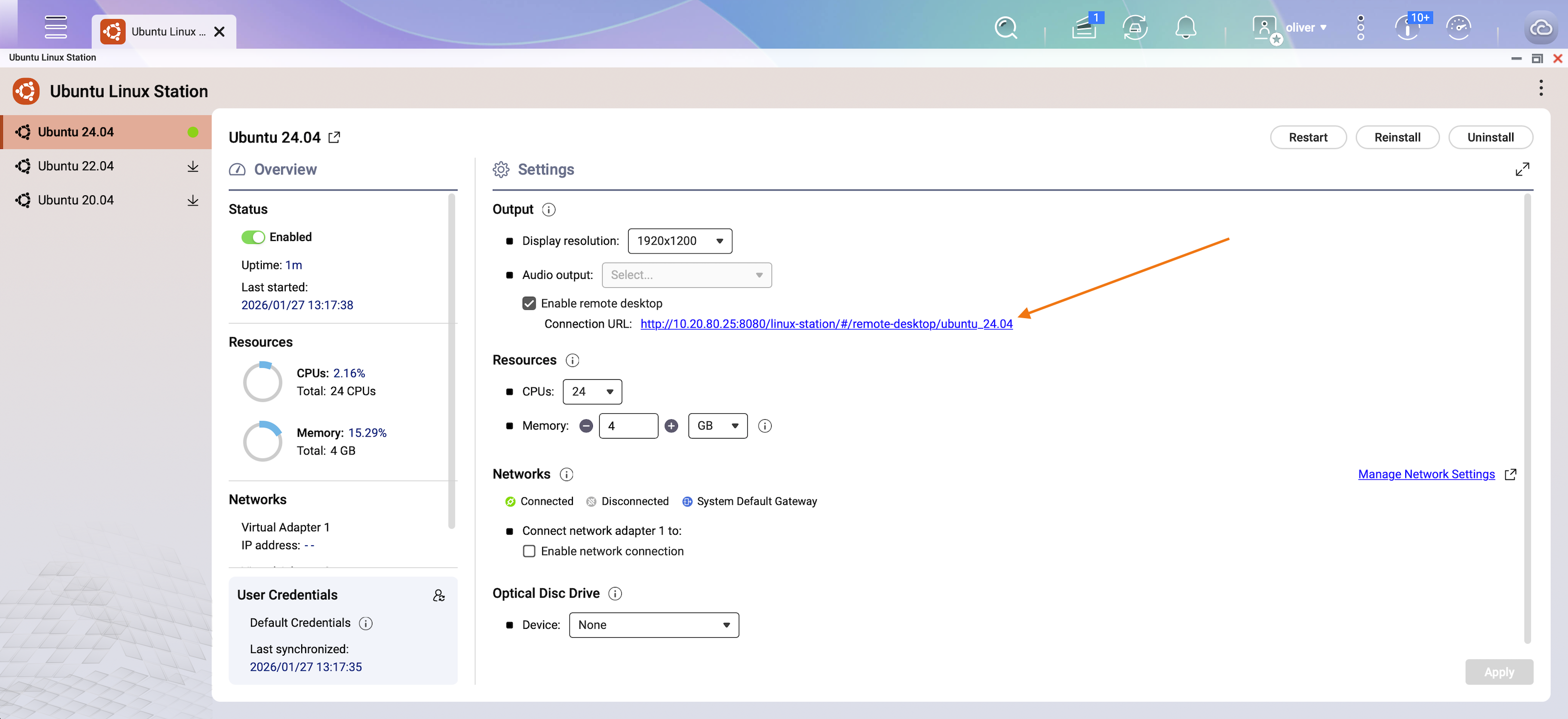
- After installation, a VNC remote access link will be displayed.
- Click the link to open the Ubuntu desktop.
Step 4: Log in to Ubuntu
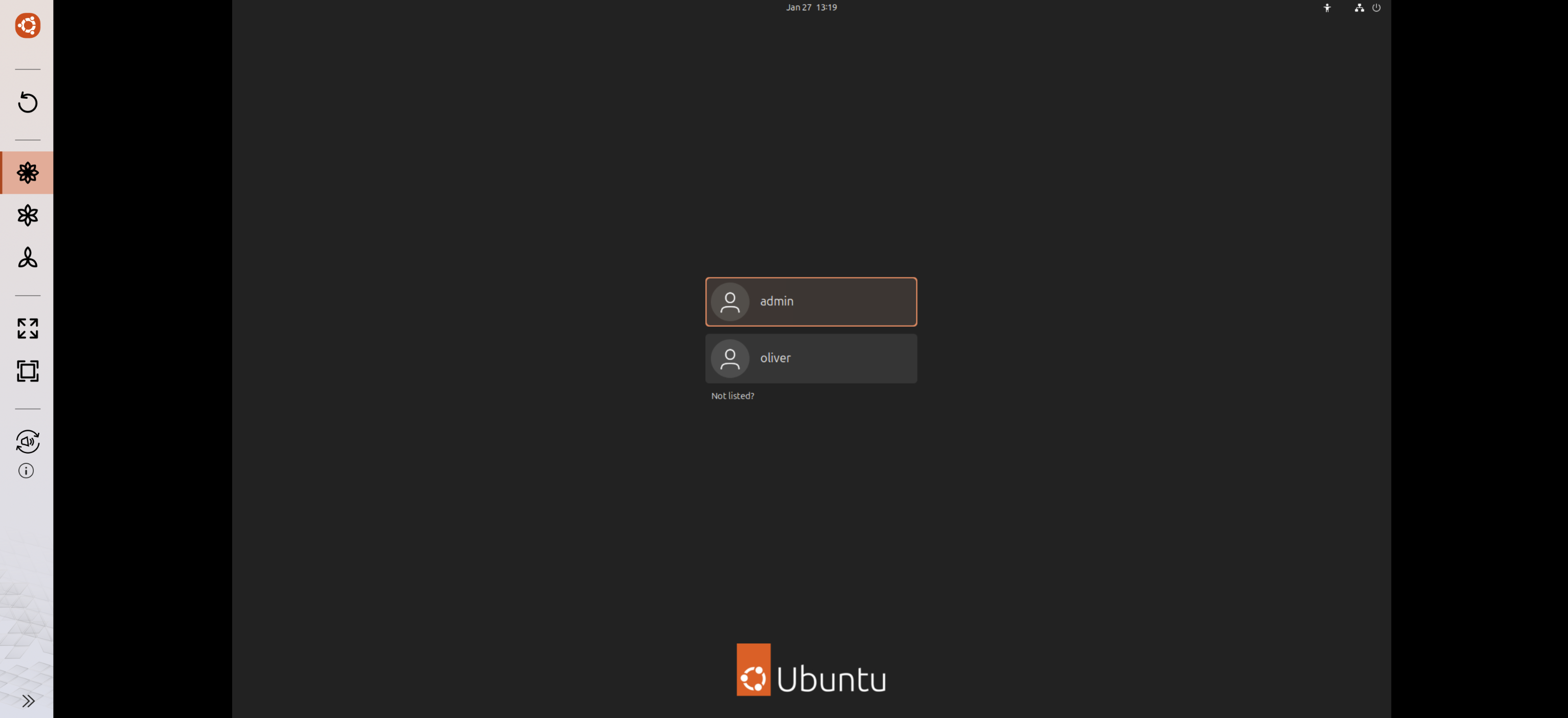
At the Ubuntu login screen, sign in using your NAS account credentials.
Step 5: Open Terminal
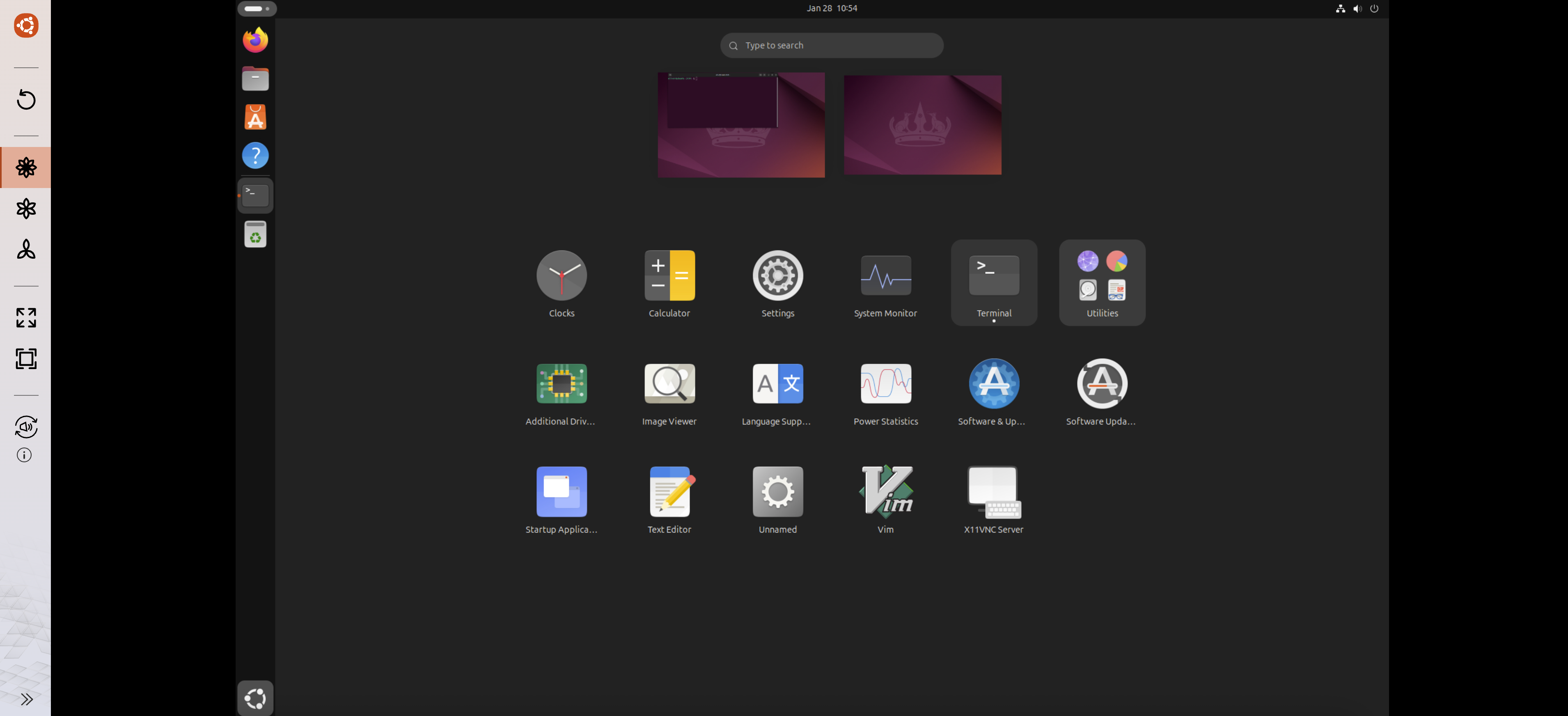
Once logged in to the Ubuntu desktop, open Terminal.
Step 6: Install OpenClaw (Clawdbot / Moltbot)
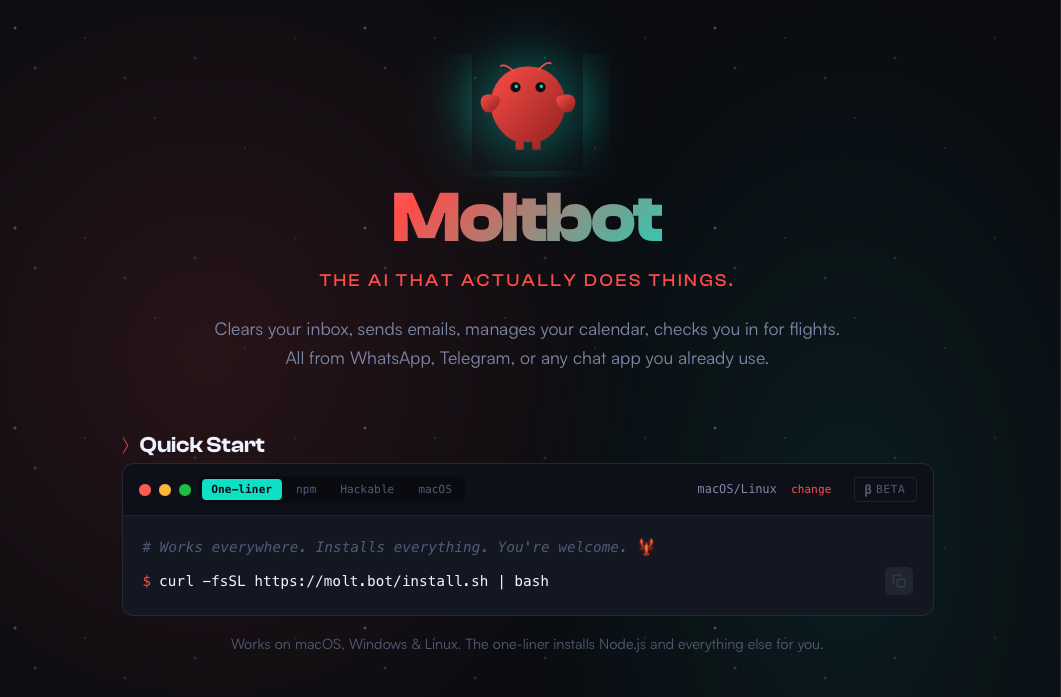
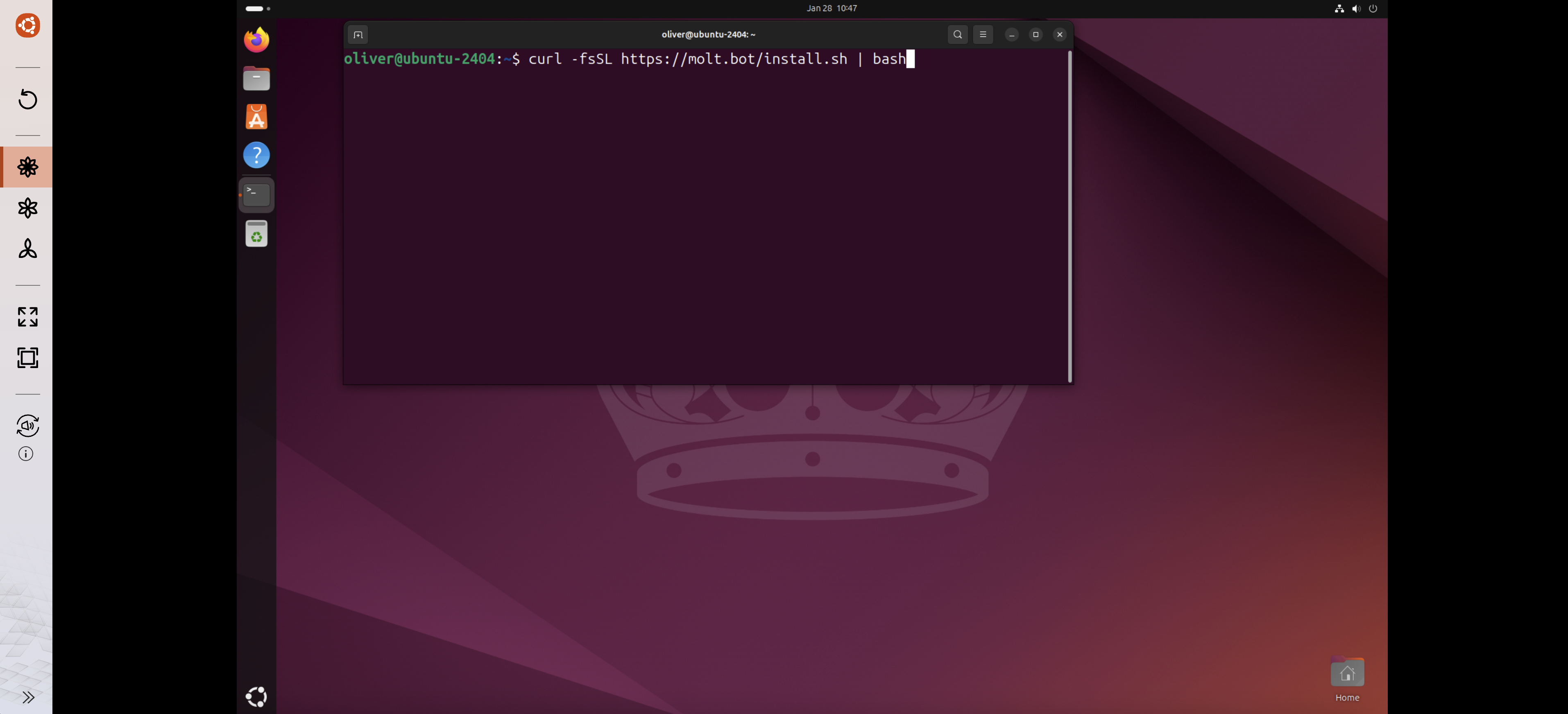
In the terminal, enter the installation command provided on the OpenClaw website:
Step 7: Complete OpenClaw Setup
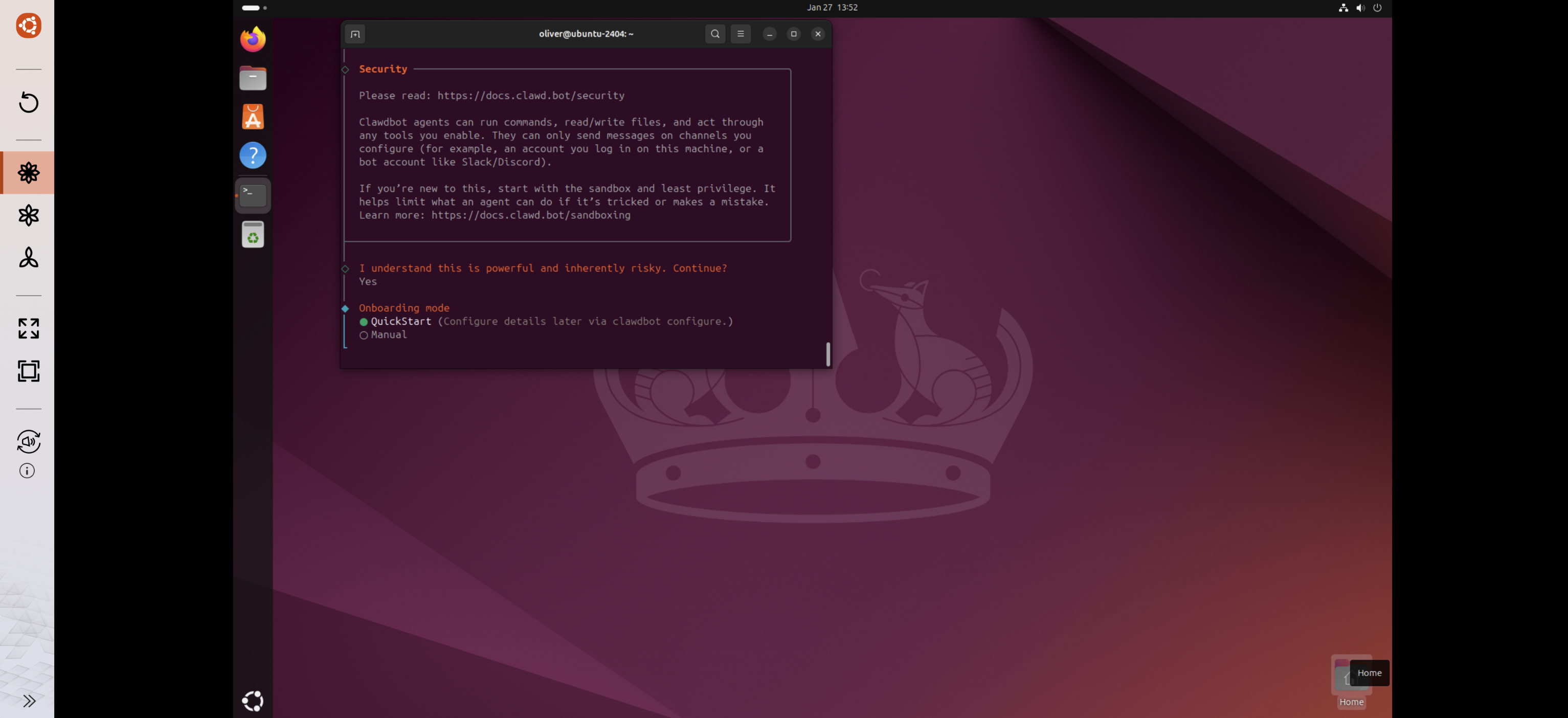
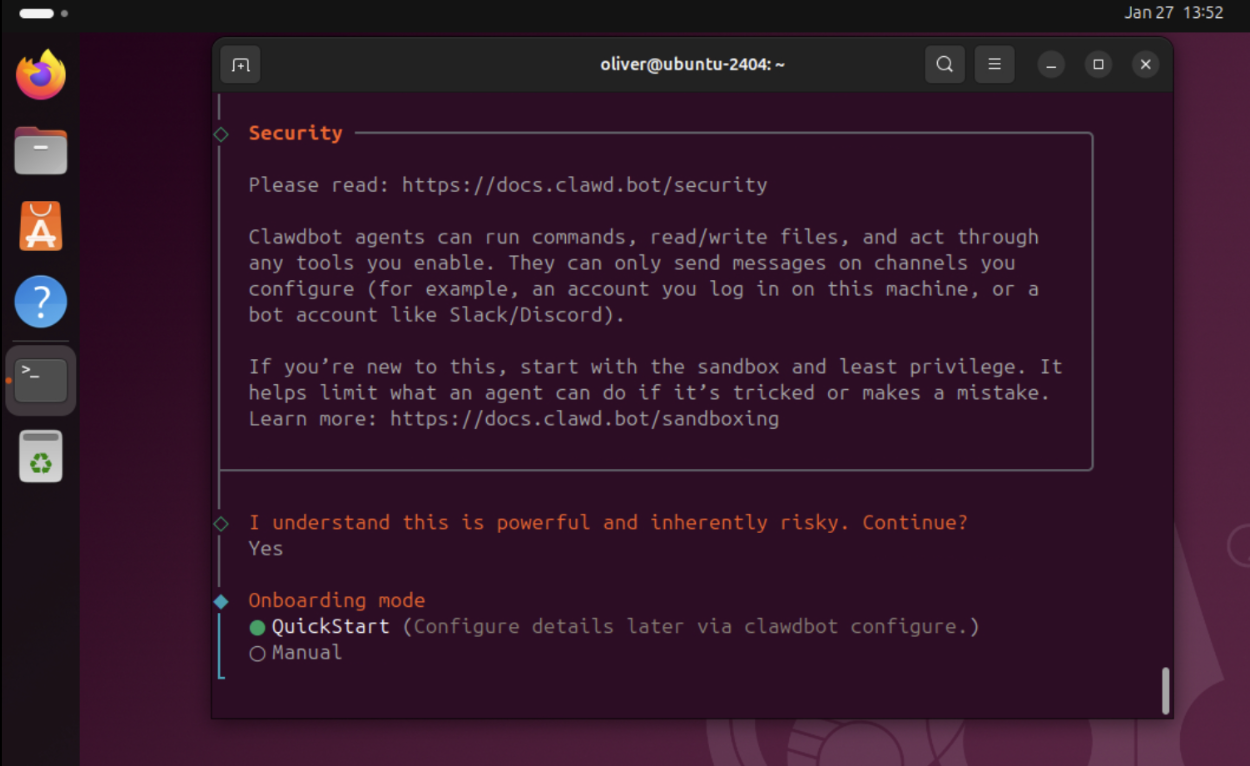
Follow the on-screen instructions provided by OpenClaw to complete the configuration and installation.
Result
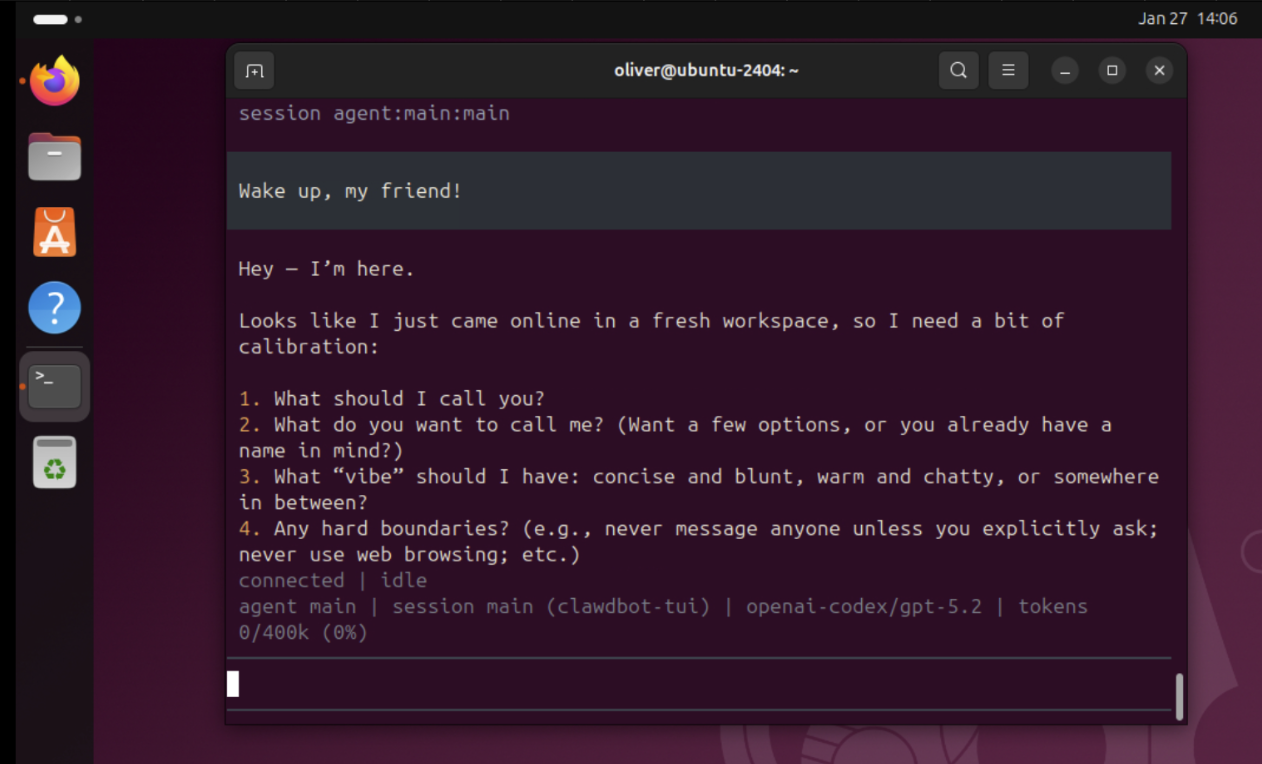
After completing the above steps, OpenClaw should be successfully installed and running within the Ubuntu Linux Station environment on your QNAP NAS.
Tip
To allow devices other than the NAS to connect to the OpenClaw web interface, you can add a network card through Ubuntu Linux Station network settings and have the Ubuntu environment obtain an external IP address. Then, you can use that IP address to connect other devices.
Removal / Uninstallation
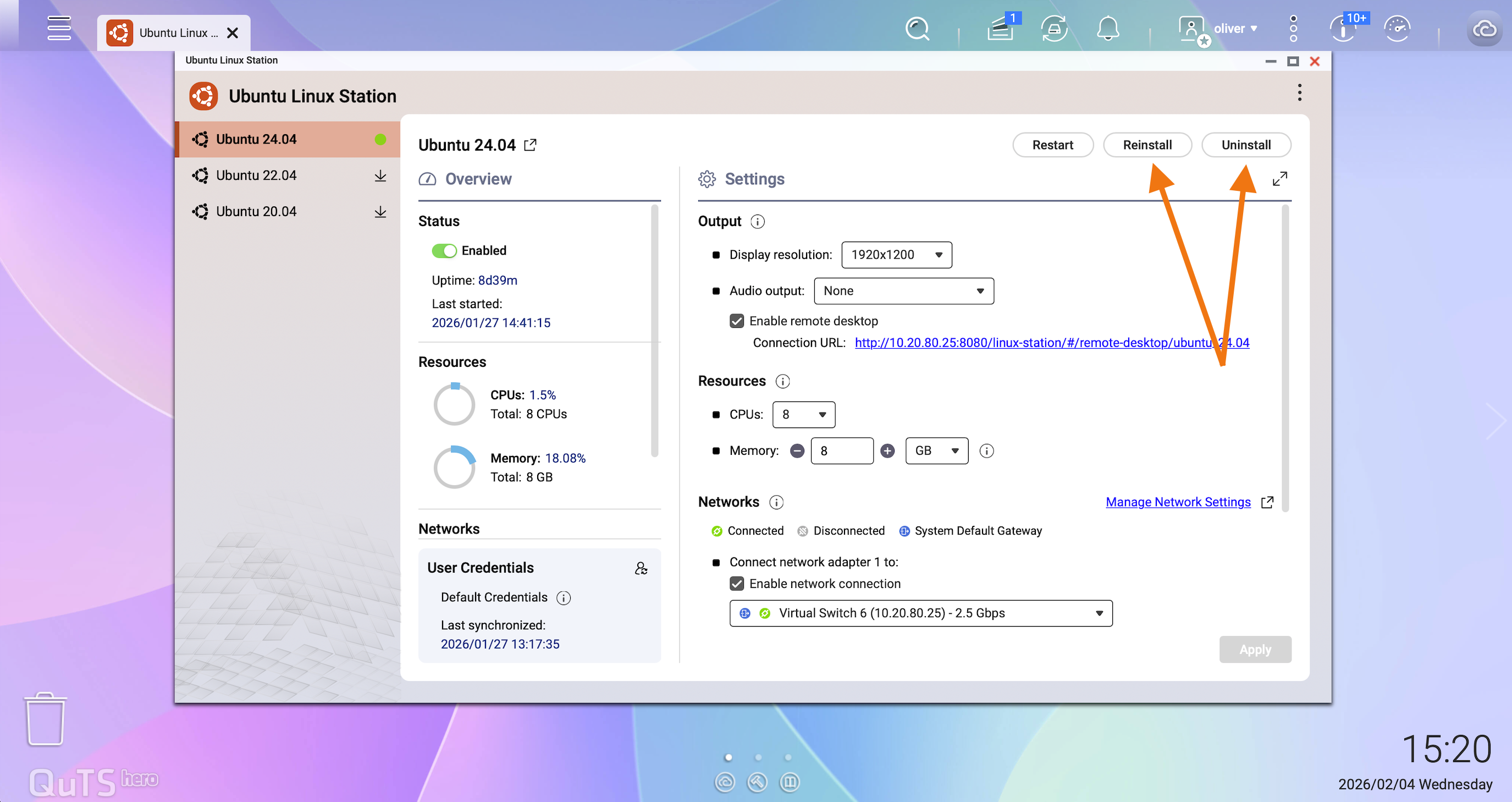
OpenClaw is installed and operated entirely within the Ubuntu environment provided by Ubuntu Linux Station. QNAP does not provide a separate uninstallation procedure for OpenClaw itself.
To completely remove OpenClaw and any related data or configuration, the recommended approach is to reinstall the Ubuntu operating system within Ubuntu Linux Station. Reinstalling the OS resets the Ubuntu environment to a clean state and ensures that all installed third-party applications, services, and credentials are removed.
Before reinstalling, make sure to back up any data in the Ubuntu environment that you want to keep.
Important Notes
- Ubuntu Linux Station is deployed using container technology. As a result, the operating environment and application data may be removed if the Ubuntu instance is reinstalled or reset.
- If long-term data persistence is required, consider deploying OpenClaw (Clawdbot / Moltbot) using Virtualization Station with a full virtual machine instead.
- Alternatively, we recommend backing up the OpenClaw (Clawdbot / Moltbot) installation directory and related data to a persistent NAS shared folder.
- OpenClaw (Clawdbot / Moltbot) is a third-party application not developed or maintained by QNAP. Before installation, please review the tool’s documentation and usage policies carefully.
- When using third-party tools, always evaluate potential data security and privacy risks.
Further Reading
How does QNAP enhance user data security in Ubuntu Linux Station?
安全与风险考量
OpenClaw(前称 Clawdbot / Moltbot)是一款强大的自动化工具,可以访问本地文件、执行命令,并根据配置使用 API 密钥或令牌等凭证。因此,用户必须谨慎配置并对其使用承担全部责任。
- 访问控制:不要将 OpenClaw 的网页界面直接暴露在公共互联网。如果需要远程访问,请使用 VPN、IP 允许列表或强身份验证机制。
- 第三方扩展:仅安装来自可信来源的技能或扩展。安全研究表明,恶意扩展可能会尝试窃取数据或凭证。
- 隔离和权限:在隔离环境中运行 OpenClaw(例如 Ubuntu Linux 工作站),避免授予不必要的系统或根权限。
- 凭证保护:仔细保护 API 密钥和令牌,如果怀疑泄露,请及时更换。
较佳实践: OpenClaw 适用于优异或实验性使用。我们建议在启用长时间运行或无人值守操作之前,始终审查安全影响。了解 QNAP 如何在 Ubuntu Linux Station 中确保用户数据安全性,以及您如何进一步增强数据安全性。
注意
开发者多次重命名项目(Clawdbot → Moltbot → OpenClaw)。旧文档可能仍然引用“Clawdbot”或“Moltbot”,但它们指的是同一个工具。
如果希望除 NAS 以外的设备连接到网页界面,可以在 Ubuntu Linux 工作站网络设置中添加网络适配器,并为 Ubuntu 环境获取外部 IP 地址。不要将网页界面直接暴露在公共互联网。请参阅上面的安全与风险考量部分以获取推荐的访问控制。
适用产品
- QNAP NAS models that support Ubuntu Linux Station
- Ubuntu Linux Station
- Internet connection for downloading Ubuntu images and installation resources
概述
OpenClaw(以前称为 Clawdbot 和 Moltbot)是一款第三方自动化和生产力工具,旨在作为长时间运行的“代理”来执行任务(例如,管理消息、电子邮件、日历,并根据配置运行本地命令)。官方项目定位强调“一个真正能做事的 AI”,通常通过将聊天频道连接到可以与系统交互的本地运行时来实现。
场景
您希望在 QNAP NAS 上部署 Ubuntu 桌面环境,以便全天候测试或操作 OpenClaw。本示例使用 Ubuntu 24.04,但也可以使用其他支持的 Ubuntu 版本。
截图:在 QNAP NAS 上运行的 Ubuntu Linux 工作站桌面环境
步骤
步骤 1:安装 Ubuntu Linux 工作站
- 登录 QNAP QTS。
- 打开 App Center。
- 搜索并安装 Ubuntu Linux 工作站。
步骤 2:下载并安装 Ubuntu
- 启动 Ubuntu Linux 工作站。
- 选择要安装的 Ubuntu 版本。
- 在此示例中,选择 Ubuntu 24.04。
- 等待镜像下载和安装完成。
步骤 3:通过 VNC 连接
- 安装完成后,将显示 VNC 远程访问链接。
- 点击链接以打开 Ubuntu 桌面。
步骤 4:登录 Ubuntu
在 Ubuntu 登录屏幕上,使用您的 NAS 帐户凭据登录。
步骤 5:打开终端
登录到 Ubuntu 桌面后,打开 终端。
步骤 6:安装 OpenClaw(Clawdbot / Moltbot)
在终端中,输入 OpenClaw 网站上提供的安装命令: 网站:
步骤 7:完成 OpenClaw 设置
按照 OpenClaw 提供的屏幕指示完成配置和安装。 完成配置和安装。
结果
完成上述步骤后,OpenClaw 应成功安装并在您的 QNAP NAS 上的 Ubuntu Linux 工作站环境中运行。 应成功安装并在您的 QNAP NAS 上的 Ubuntu Linux 工作站环境中运行。
提示
为了允许 NAS 以外的设备连接到 OpenClaw 网页界面,您可以通过 Ubuntu Linux 工作站网络设置添加网卡,并让 Ubuntu 环境获取外部 IP 地址。然后,您可以使用该 IP 地址连接其他设备。
移除 / 卸载
OpenClaw 安装和操作在 Ubuntu Linux 工作站提供的 Ubuntu 环境中。QNAP 不提供 OpenClaw 本身的单独卸载程序。
要移除 OpenClaw 及任何相关数据或配置,推荐的方法是在 Ubuntu Linux 工作站中重新安装 Ubuntu 操作系统。重新安装操作系统将 Ubuntu 环境重置为干净状态,并确保所有已安装的第三方应用程序、服务和凭据被移除。
在重新安装之前,请确保备份您希望保留的 Ubuntu 环境中的任何数据。
重要注释
- Ubuntu Linux 工作站使用容器技术部署。因此,如果重新安装或重置 Ubuntu 实例,操作环境和应用数据可能会被移除。
- 如果需要长期数据持久性,考虑使用Virtualization Station部署 OpenClaw(Clawdbot / Moltbot)与完整的虚拟机一起。
- 或者,我们建议将 OpenClaw(Clawdbot / Moltbot)的安装目录和相关数据备份到持久的 NAS 共享文件夹中。
- OpenClaw(Clawdbot / Moltbot)是第三方应用程序,不由 QNAP 开发或维护。安装前,请仔细查看工具的文档和使用政策。
- 使用第三方工具时,请始终评估潜在的数据安全和隐私风险。
进一步阅读
QNAP 如何在 Ubuntu Linux 工作站中增强用户数据安全性?


