阅读约 8 分钟


Key Takeaway: Use ADRA NDR X to Defend Against Internal Network Threats and Make Up for What EDR Can't Do
Ransomware software can now bypass EDR (Endpoint Detection and Response), so enterprises need an additional detection mechanism that operates independently from endpoints and directly monitors internal network (LAN) traffic—this is NDR (Network Detection and Response) deployed at the network layer. Even if endpoint protection fails, attackers’ lateral movements will still be visible on the network and can be blocked in real time. QNAP ADRA NDR X enables enterprises to build this network defense chain using existing NAS and compatible switches, allowing proactive internal network detection and isolation. In addition to being license-free, it can also integrate NAS snapshots and 3-2-1-1-0 backups, creating a comprehensive data security solution that links detection, isolation, and recovery.
Cybersecurity company warning: EDR was already shut down before the threat alert was triggered
According to cybersecurity company ESET's 2026 research, around 90 EDR Killer tools have been tracked in the market, among which 54 exploit BYOVD (Bring Your Own Vulnerable Driver) technology to gain system kernel privileges and directly terminate endpoint protection programs.
Behind the statistics of these 90 tools lies a commercialized attack supply chain. ESET further exposed the ransomware-as-a-service (RaaS) group Gentlemen, which provides attackers with an EDR Killer tool called GentleKiller: GentleKiller has at least 8 variants, disguises itself as legitimate software such as Kaspersky and Valorant, and can precisely target more than 48 security products, covering over 400 processes. The toolkit even includes third-party tools like HexKiller, ThrottleBlood, and HavocKiller as substitutes.
What's even more sophisticated is the attack method itself. BYOVD attacks load drivers that are 'legitimately signed but vulnerable.' The operating system allows them, enabling attackers to escalate privileges to kernel level, forcibly terminate EDR engines, log collection, and monitoring services. Throughout the entire process, endpoint protection may not even issue a final alert.
Why Relying Solely on EDR Is Not Enough for Protection
Therefore, this attack exposes not a vulnerability in a single EDR, but rather a structural single point of dependency. Endpoint detection assumes that the agent is still running properly, and the EDR Killer attack specifically targets this assumption. In addition, there are deployments where the agent simply cannot be installed, such as IP cameras, printers, IoTunit devices, legacy systems, external visitor laptops, etc. The conclusion in the U.S. CISA Red Team Exercise Report is quite direct: critical infrastructure organizations being tested are “overly reliant on host-based EDR and lack sufficient network-layer defenses.”
Once EDR is bypassed and there is no corresponding detection mechanism in the intranet, attackers essentially gain unrestricted internal access: lateral movement, scanning other unit, establishing connections, infiltrating and spreading, exfiltrating data, all without anyone noticing.
Therefore, enterprises need to deploy threat detection and response mechanisms at the network layer, such as NDR, to truly block attackers' actions. NDR identifies anomalies by analyzing internal network traffic behavior, without relying on any endpoint agents. Its value lies in being "out-of-band": it does not depend on any potentially compromised host, but observes east-west traffic at the network layer from the switch, comparing abnormal connection behaviors, detecting lateral movement, and suspicious C2 communications. Even if EDR is bypassed by GentleKiller, traces of encrypted activities on the network remain visible.
QNAP ADRA NDR X: Make QNAP NAS the proactive cybersecurity brain
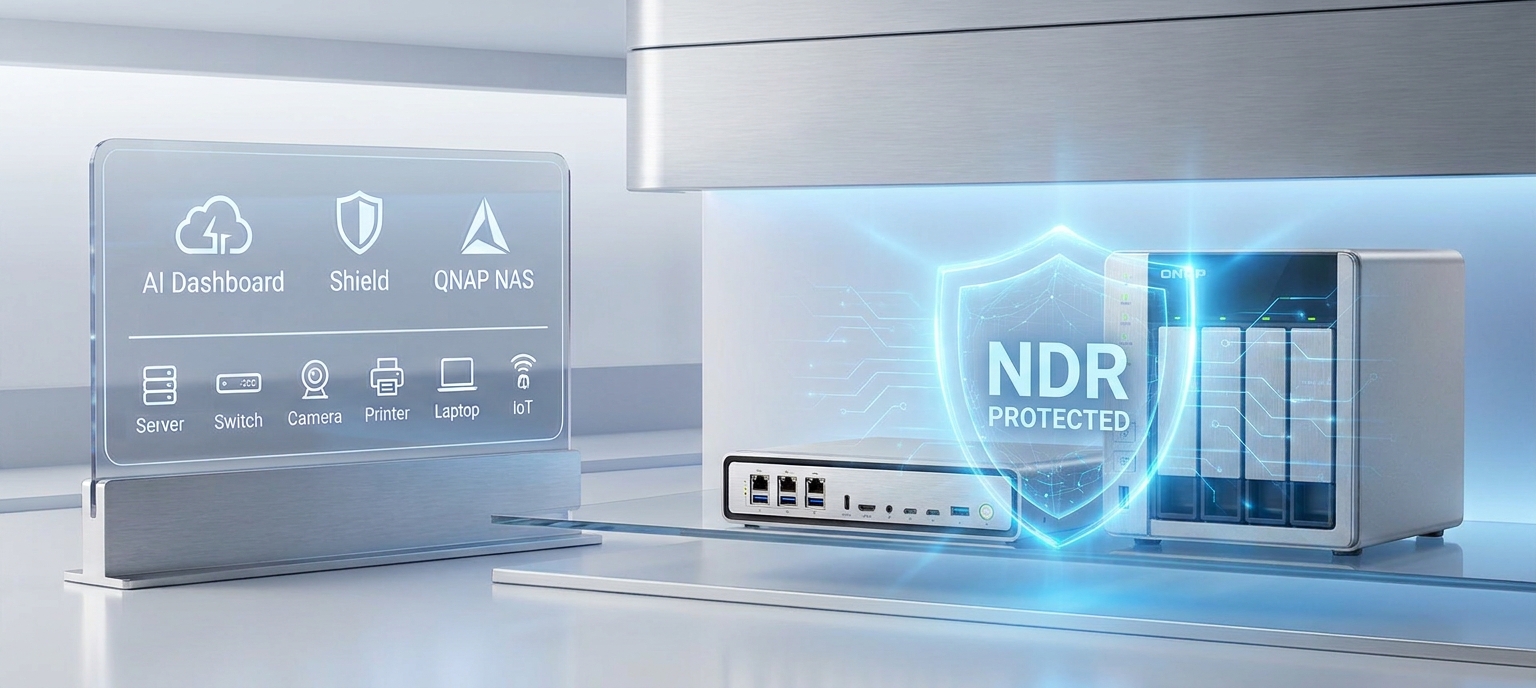
Traditional NDR solutions often mean dedicated hardware plus annual licenses priced by traffic, causing SMBs to back out at the quoting stage. QNAP ADRA NDR X does things differently: users can directly download and install it for free from App Center onto supported QNAP NAS (QTS/QuTS hero 5.2 or above), pair it with a compatible QNAP switch, and instantly upgrade their existing unit to an NDR internal threat detection center—no license fees required.
In the face of the EDR Killer scenario, ADRA NDR X's defense mechanism is divided into three layers:
-
Active Threat Trap (Threat Watch & Trap): Simulates common services such as SSH and SAMBA as honeypots, proactively luring malicious programs exploring the intranet. Selectively encapsulates detection instead of full traffic analysis, ensuring no network slowdown.
-
Lateral movement detection and deep threat analysis: Identifies abnormal intranet connections and unit behaviors, maps threat events to the MITRE ATT&CK® framework, and uses AI event analysis reports to automatically generate event summaries, infection path visualization, and remediation recommendations, so IT staff do not need to read logs one by one.
-
Automatic isolation response: When high-risk unit is detected, it can automatically isolate the unit, providing four levels of protection from “notification only” to automatic lockdown, preventing spread without interrupting the entire network operation.
QNAP ADRA NDR X adopts an agentless design, allowing enterprise IT to deploy quickly without having to install software on every employee's computer. It operates without impacting network performance and does not affect daily operations, ensuring that all connected endpoints unit receive comprehensive security protection. In addition, the solution integrates dual reporting of “single event AI intelligent threat analysis” and “overall internal network security overview,” helping IT staff accurately transform security data into actionable key insights, fully grasp the enterprise's security posture, and respond efficiently in real time.
ADRA NDR X vs EDR Key Comparison
| Comparison Items | QNAP ADRA NDR X | EDR |
|---|---|---|
| Detects data source | Network packets and suspicious activities of lateral movement within the intranet | Data from single endpoint deployment |
| Unmanaged unit protection | Comprehensive coverage. No need to install Agent, fully protects IoT, OT, and BYOD. | Unable to cover. Unmanaged unit without Agent installation is completely invisible. |
| Resistance to being shut down and anti-tampering capability | is extremely high. It operates independently from the computer, so even if the computer is infected, it cannot be disabled. | is relatively weaker. Once elevated privileges are obtained, it is easily shut down by hackers or the Agent is disabled. |
| License fee model | No license fee. No limit on the number of installations, suitable for unit enterprises with many users. | Fees are calculated based on the number of endpoints. Charged per device, the more unit you have, the higher the linear cost growth. |
| Deployment and Maintenance Costs | Low cost, zero disruption. Only need to set up traffic mirroring, no need to access endpoint computers. | High cost, complex maintenance. Requires deploying software on each device and handling software conflicts and strategy adjustments. |
| Regulatory Compliance (NIST CSF 2.0 / NIS2) | Compliant. Meets the mandatory requirements for “continuous network monitoring.” | Requires integration with other tools. Only provides endpoint logs and cannot independently meet network layer compliance. |
The Ultimate Insurance for Data Security: Immutable Snapshots and 3-2-1 Backup
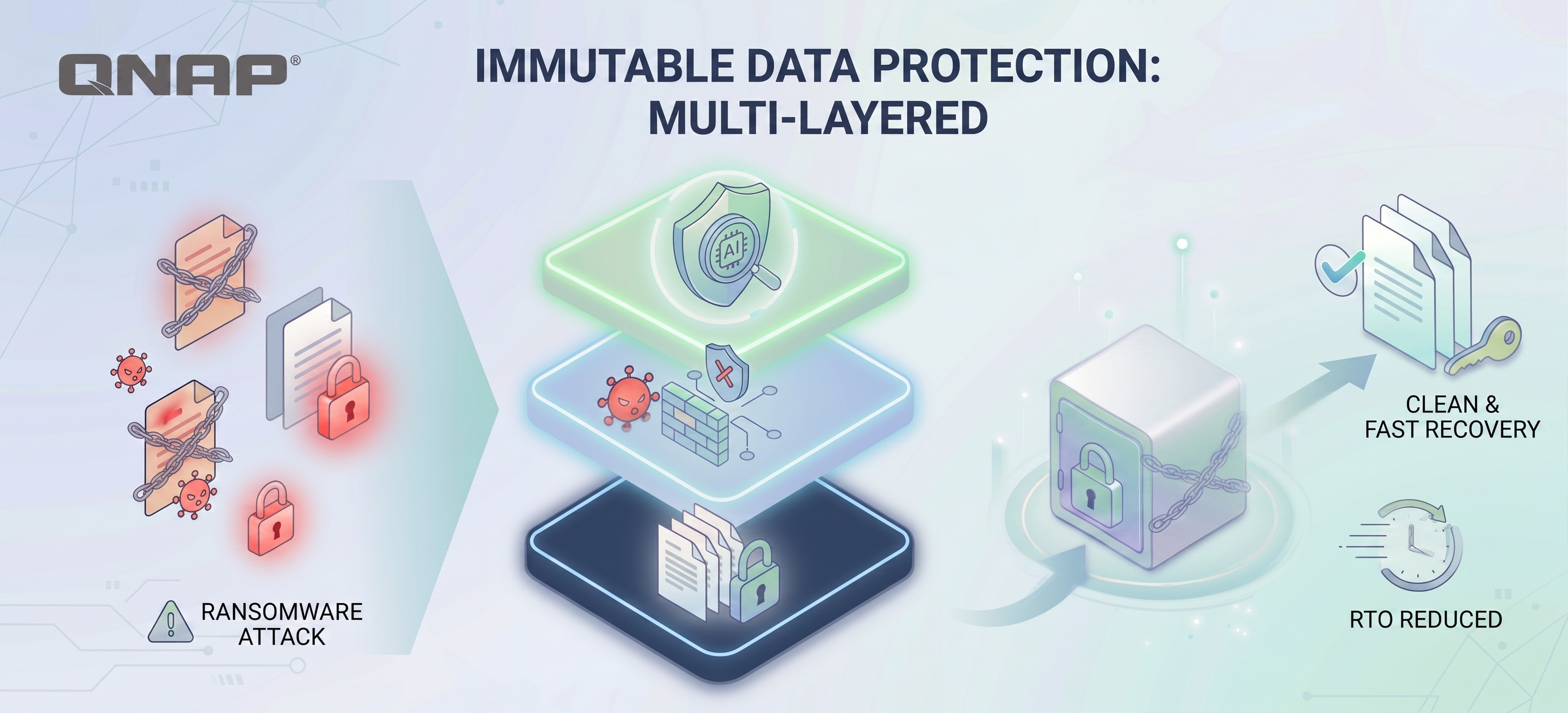
However, enterprises should note that no detection layer can guarantee 100% interception, especially as threats become more complex in the AI era. ADRA NDR X can be integrated with QNAP's NAS snapshot technology to restore data to its intact state before infection after threat isolation. By following the 3-2-1-1-0 backup principle (3 copies of data, 2 types of media, 1 offsite copy, 1 offline/immutable copy, 0 errors), even when facing threats, enterprises can still retain a clean backup that attackers cannot encrypt or tamper with, creating a comprehensive data security solution.
FAQ (FAQ)
What is EDR Killer? Why can't antivirus software block it?
EDR Killer is a specialized attack tool targeting endpoint protection, often leveraging BYOVD technology to load vulnerable drivers with valid signatures, forcibly terminating security software programs after obtaining kernel privileges. Because the drivers are legally signed, operating systems and antivirus engines often treat them as legitimate components and allow them to run.
Already have EDR, do you still need NDR?
Yes, you do. Both cover different stages of the attack chain: EDR excels at blocking execution and persistence on endpoints, while NDR specializes in detecting lateral movement, C2 communications, and data exfiltration. NDR is deployed at the network layer and won't be affected if the main host is shut down, making it a reliable external detection source when EDR is compromised. For example, QNAP is one of the security service providers offering NDR solutions, helping enterprises monitor internal packet and traffic anomalies and precisely block high-risk behaviors and deployments without changing their existing network infrastructure.
Does ADRA NDR X require an additional license?
No. ADRA NDR X can be downloaded for free from App Center and installed on supported QNAP NAS. When used with compatible QNAP switches, there is no need to pay extra license fees.